Exercise Physiology Testing
KSI provides testing options to fit your needs so you can optimize your health, performance, and safety. We offer many testing options as well as feedback that you can use immediately!
Capabilities
Our laboratories are state-of-the-art facilities equipped with environmental chambers, metabolic testing systems and body composition technology designed to examine the influence of heat and physical exertion on individuals while providing you with deeper insights into your health, fitness, and performance. These assessments not only help determine your ability to safely perform in hot conditions, but also provide valuable information about your overall health, fitness, and metabolic efficiency. By understanding how your body performs under stress, our testing services can help guide your strategies to maximize your performance, optimize wellness, and support long-term health and quality of life.
Locations
All of KSI’s exercise physiology testing can be conducted at either of our locations, the primary location at UConn in Storrs, Connecticut and KSI at UNF in Jacksonville, Florida.
University of Connecticut
The MISSION Heat Laboratory and the National Laboratory for Laborer Heat Safety by Magid and MISSION, both located in the College of Agriculture, Health and Natural Resources.
University of North Florida
The Perry Weather Heat Lab located in the Brooks College of Health.
It’s been a while since the KSI Team helped me with my quest for a 100 mile finish. After last year’s failed attempt, I went back to the drawing board armed with the insight you gave me regarding my electrolyte and fueling needs. I’m happy to be able to tell you that this past weekend, after another long training season, I ground my way to a finish in The Burning River 100, the race that had beaten me 3 prior times. I could not have done it without you and the Team at KSI
- Matt Coz, Burning River 100 Finisher
Services
Body Composition Analysis Consultation:
Are you looking to assess your body composition? Our body composition testing (BodPod, Bioelectrical Impedance, DEXA) can provide you with your fat-free mass, fat mass, percent body fat, and bone mineral density values. Track your progress surrounding training in preparation for a race, or to simply achieve your health goals. Our body composition consultation includes recommendations for exercise and nutrition to reach your potential.
VO2max Test:
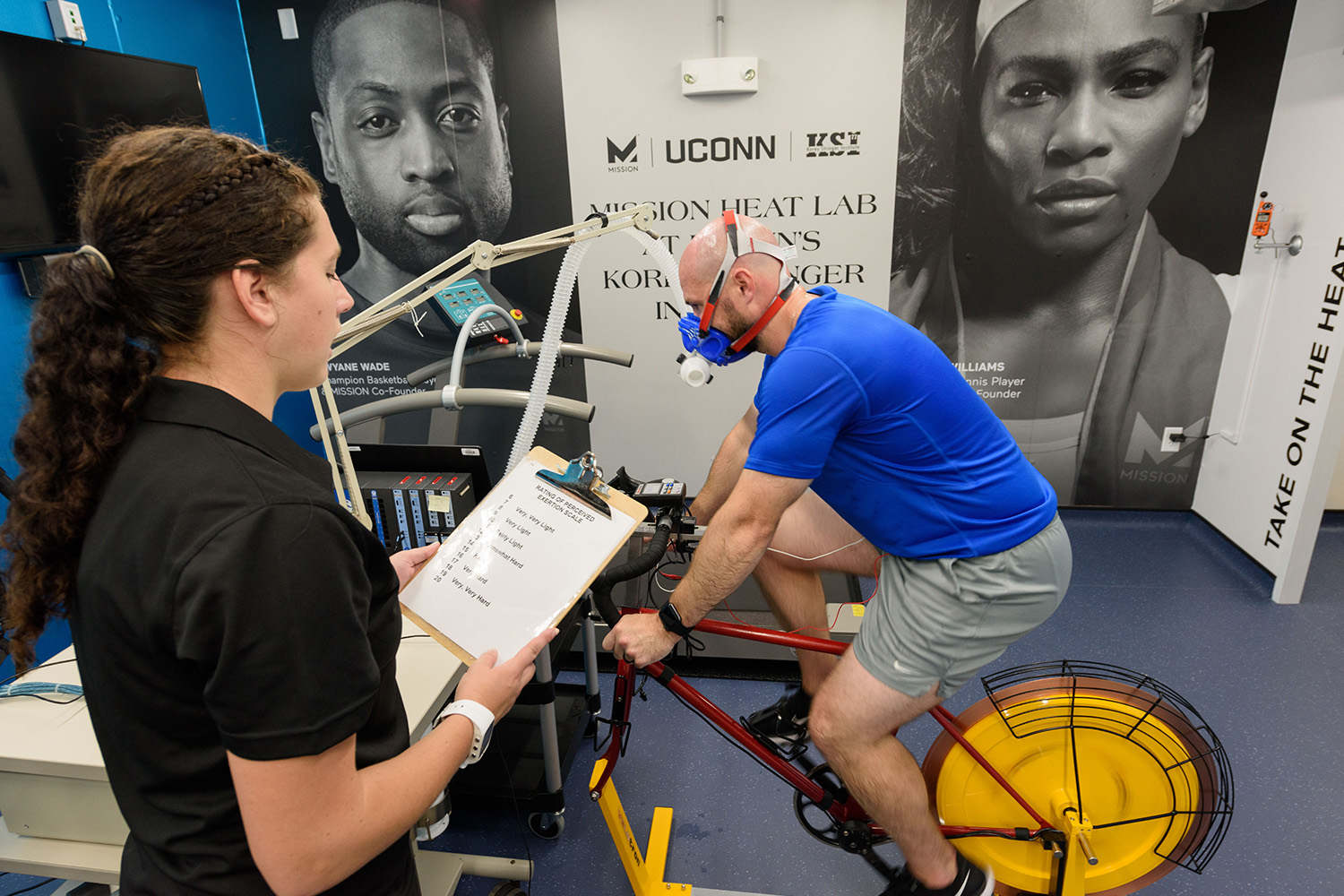
Whether you are looking to assess your baseline aerobic fitness level or track your fitness improvements leading up to that big race, KSI can help you. While gradually increasing the intensity of either running or cycling, we measure how much oxygen your body is using. The VO2max test is the most commonly used test to assess cardio-respiratory fitness in athletes but is also one of the strongest predictors of long-term health, longevity, and functional independence. Individuals with higher VO₂max values tend to have improved cardiovascular efficiency, better metabolic health, and greater resilience to physical stressors. This is especially helpful for athletes who wish to see their current fitness status and tailor training off this value.
During your VO2max test we can also provide your velocity at your VO2max VVO2 which really tells you more about your aerobic capabilities as well as give you an estimate of your anaerobic threshold (AT). With these values we can help to identify speed or heart rate zones in which you can train. Lastly, we can provide you with your exercise economy and/or running economy (RE) which is the energy demand for a given velocity. Runners/cyclists with good RE use less energy and therefore less oxygen than runners/cyclists with poor RE at the same velocity/watts.
Substrate Utilization Test:
Interested in knowing if you burn predominately carbs or fat at race pace? What you use for energy at different speeds/watts is important for you to know going into training or a race so that you can replace those calories. With a modified VO2max protocol we can determine how much energy you are using at a given intensity and what percentage of that comes from carbohydrate or fat. When combined with our nutrition and hydration analysis, we remove the guesswork from your diet plan.
Resting Metabolic Rate:
Interested in knowing how many calories your body burns at rest? Using metabolic testing, we can accurately measure the number of calories you burn at rest and determine your daily needs. Your resting metabolic rate represents the minimum amount of energy your body requires to support essential physiological functions. This information is critical for developing personalized nutrition and training strategies to support weight management, performance goals, and overall health. When combined with your dietary intake and exercise routine, we help you establish your daily energy needs.
Sweat Rate and Sweat Electrolyte Test:
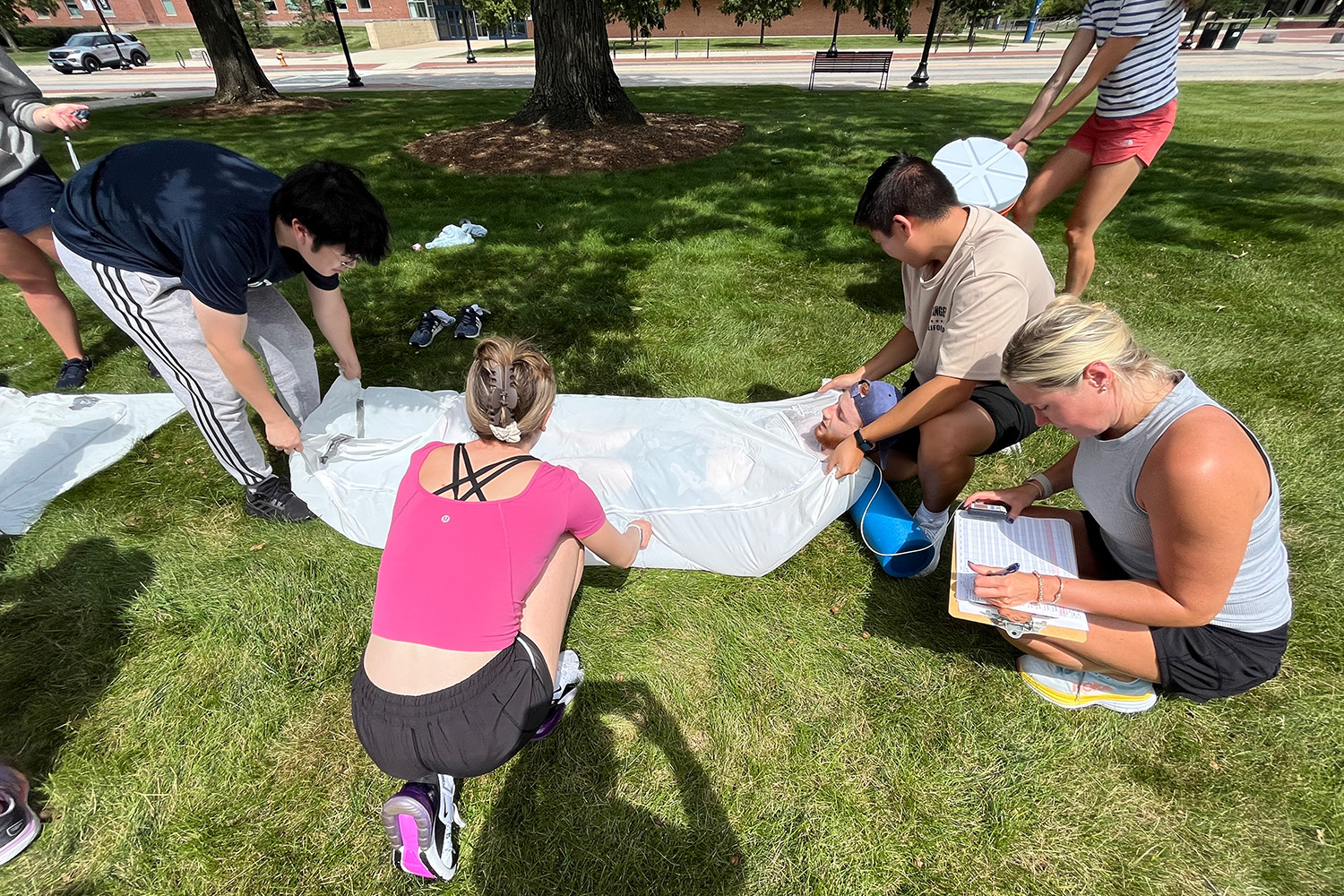
The key to a great hydration plan is knowing what you are losing while you exercise. To determine your sweat rate we measure your body mass losses through sweating and urination and take into account your fluid intake during a standardized exercise session. Knowing your sweat rate will reduce your body temperature and heart rate enabling you to maintain performance. To determine your electrolyte needs we use the gold standard whole body washdown technique. With this method we are able to determine the exact amount of electrolytes you lose in your sweat in order to help you understand what you need to replace. We will provide you the exact amount of electrolytes you lose in grams of sodium, potassium and chloride (per hour and per liter of sweat) so that you can better replace your losses and keep moving in those long hot races.
Heat Tolerance Test (HTT):
The Israeli Defense Force Heat Tolerance Test test is performed to examine a person’s ability to tolerate low-intensity exercise (5km/hr at 2% grade) in a hot environment (104°F, 40% humidity) for a two hours. This test has been widely used in both the military and athletic settings to determine if it is safe to return to activity following heat stroke.Understanding how well you handle heat stress can help also you prepare for training or racing. If you have struggled in the heat previously this test in combination with a VO2max test can enable us to provide you with a sample return to activity and acclimatization protocol that suits your needs.
Lactate Threshold (LT):
Your lactate threshold is the exercise intensity at which lactate begins to accumulate in your blood. This can be measured through finger or ear pricks during a progressive exercise bout. Similar to the anaerobic threshold, this ramping protocol can help tailor your training intensities and pace to your exact physiological responses, thereby optimizing physiological gain during your training. This testing can take place on a bike or treadmill, expanding the benefits to runners, cyclists, and other athletes.
Heat Acclimatization:
Have a competition coming up in the heat? Heat acclimatization not only can improve your performance in the heat but in warm and cool weather races too! Decreased heart rate and body temperature coupled with more efficient sweating and increased blood volume are all benefits of 10-14 days of heat acclimatization. Gain access to our environmental chamber to acclimatize to any climate.
Request an Educational Service
Organizations interested in hosting a KSI educational session can contact our team to discuss program goals, audience, and format. Travel and program costs will be determined based on the scope of the request.